
Needles: A Complete Guide to Embroidery Machine Needles
In this guide, we will learn about embroidery machine needles and how to choose the right one for different fabrics and situations. Needles may look simple, but they are among the most important factors in embroidery quality.
New to embroidery? Also check our stabilizers guide and our step-by-step guide on using instant download files →
1. The Needle
Let's start with the basics: what a machine embroidery needle actually is.
A needle is not universal for all machines — different machines require different needle systems, sizes, and types. Not sure which machine you have? See our embroidery machine guide →
1.1 The Needle Anatomy
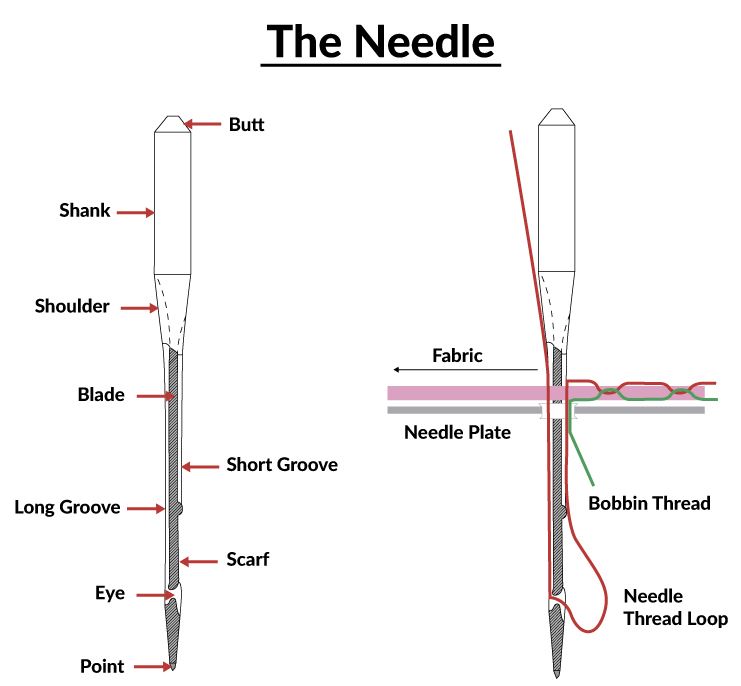
A machine embroidery needle is made of several parts:

Butt (Flat Side)
The top part of the needle. It helps position the needle correctly inside the machine.
Not all needles have the same butt shape:
- Home machines → usually flat shank
- Industrial machines → often round shank
Shank
The upper part that fits into the needle bar.
- Flat shank → common in home machines
- Round shank → common in industrial machines
Blade (Shaft)
The long body of the needle. It contains most of the functional parts.
Long Groove
A channel that guides the thread smoothly down the needle, preventing fraying and breakage.
Eye
The hole where the thread passes through to form stitches.
Point
The sharp part that first enters the fabric and creates the entry hole.
Scarf
A small indentation that helps the machine's hook catch the thread to form a stitch.
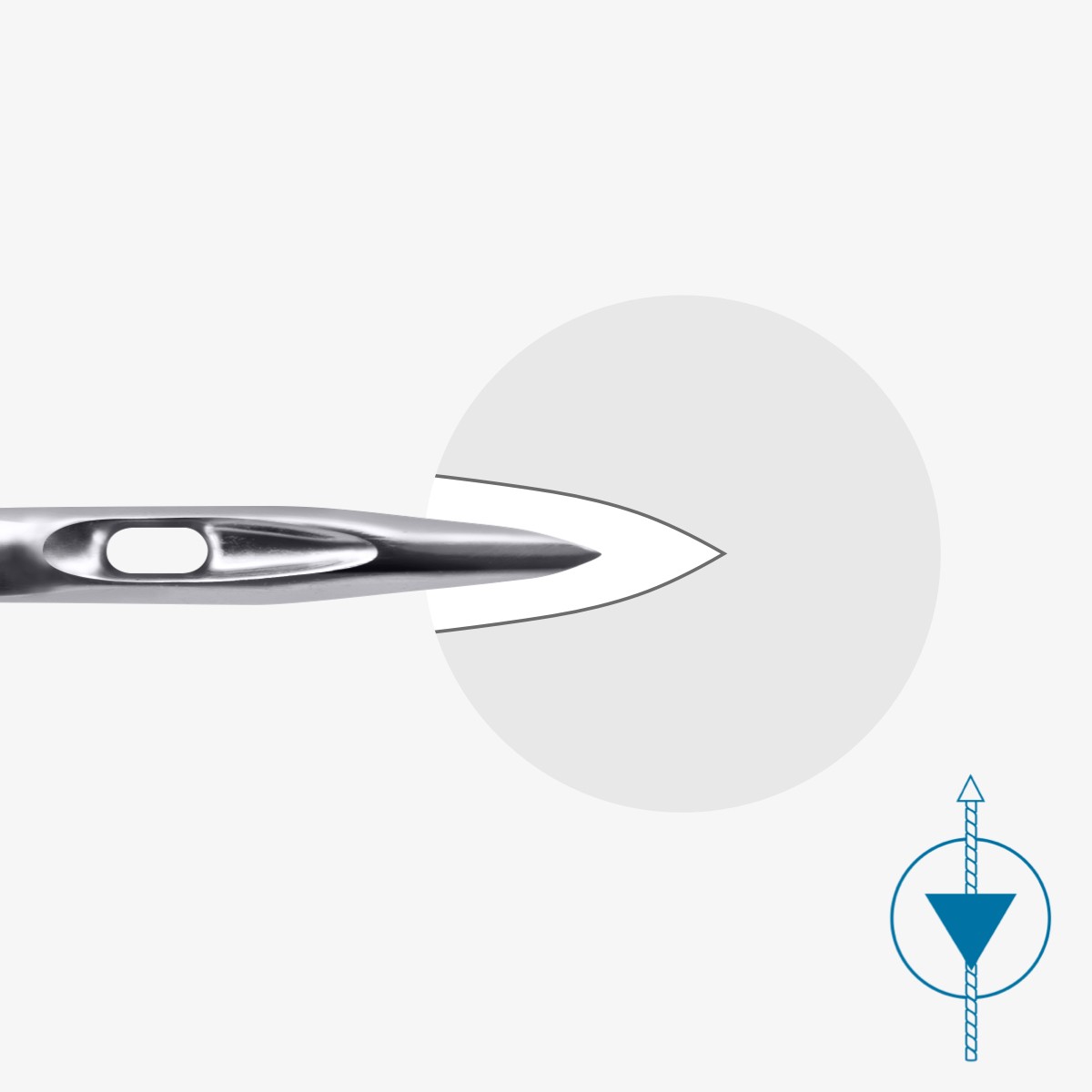
1.2 Needle Tips (Why Shape Matters)
Different needle tips are designed for different fabrics.
Slightly Rounded Point
The most common type. Works for many materials. Used in Universal, Embroidery and Topstitch needles.
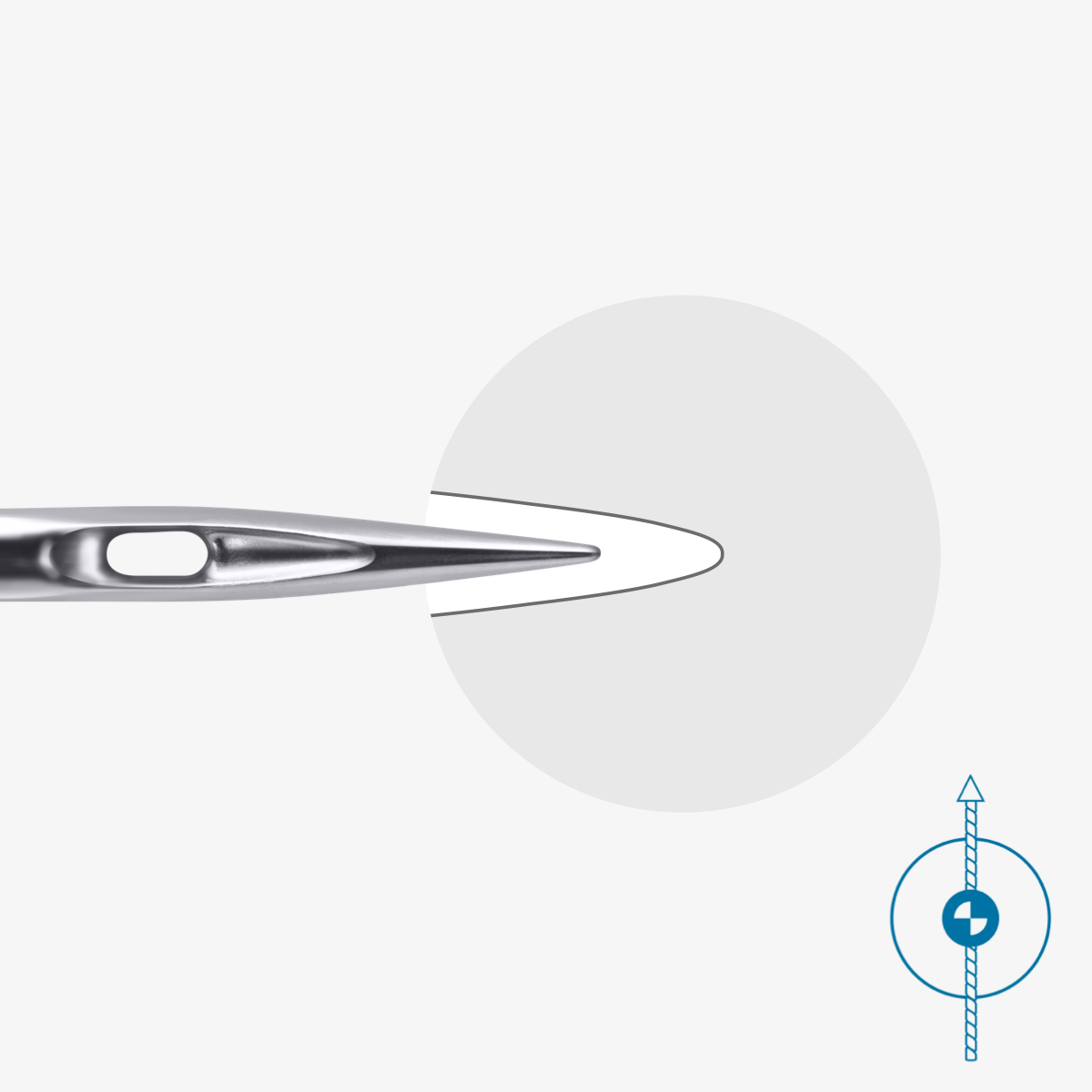
Tapered Point
Designed to pass through thick layers without damaging fabric. Used in Quilting needles.
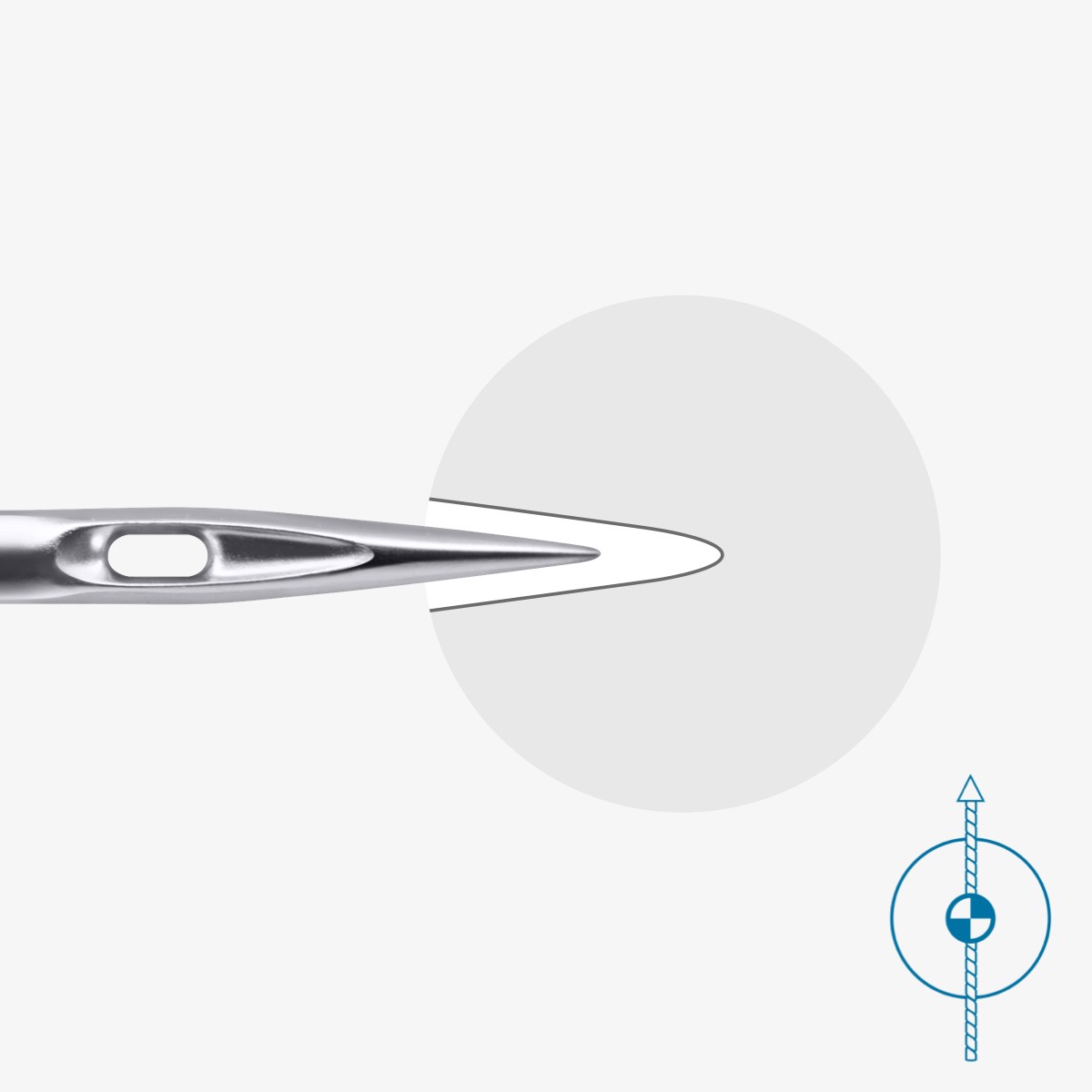
Ball Point (Light / Medium)
Pushes fabric fibers aside instead of cutting them. Used for Knit fabrics, Stretch materials, Jersey and Denim.
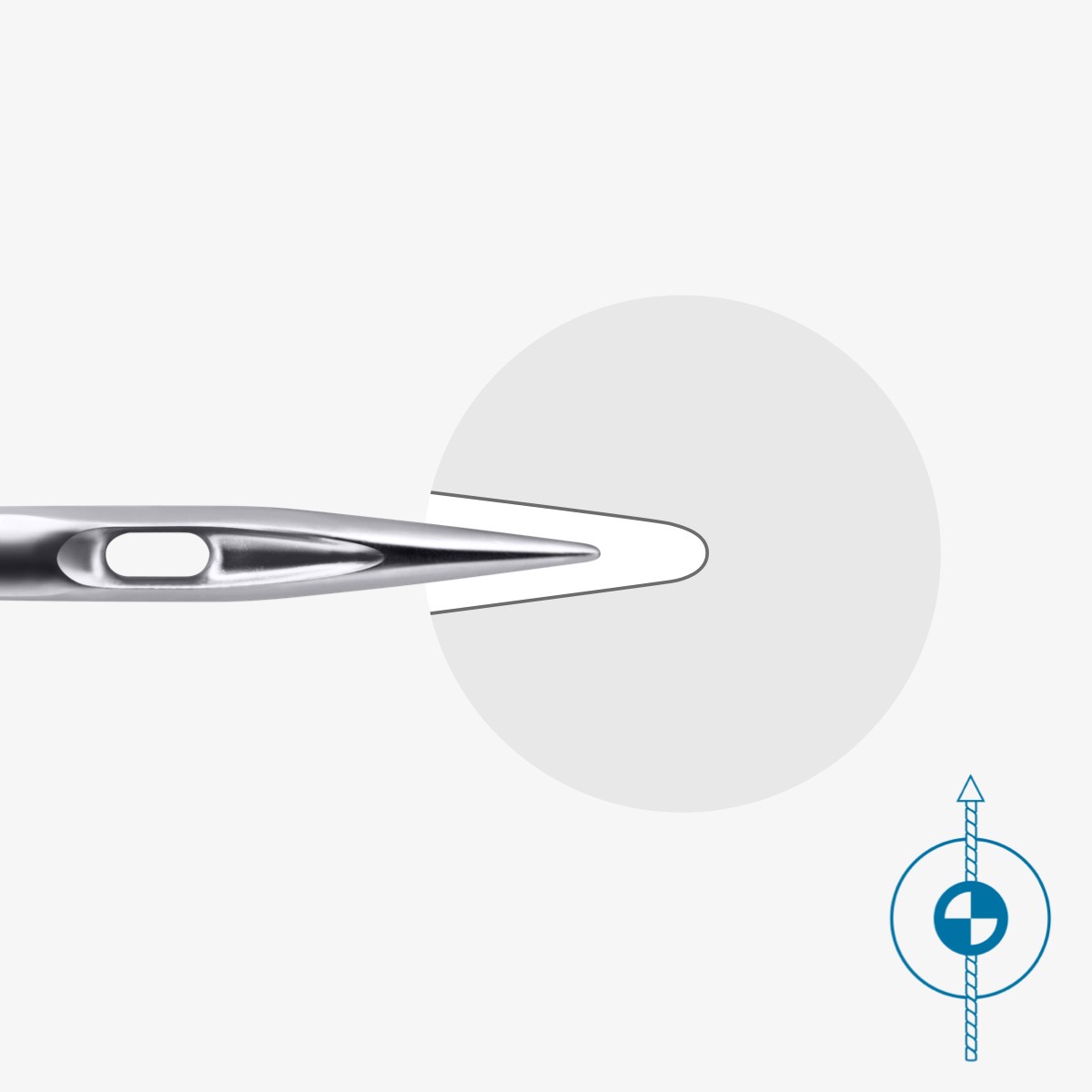
Acute (Microtex Point)
Very sharp and precise for tightly woven fabrics. Used for Microtex needles, Fine fabrics and Coated materials.
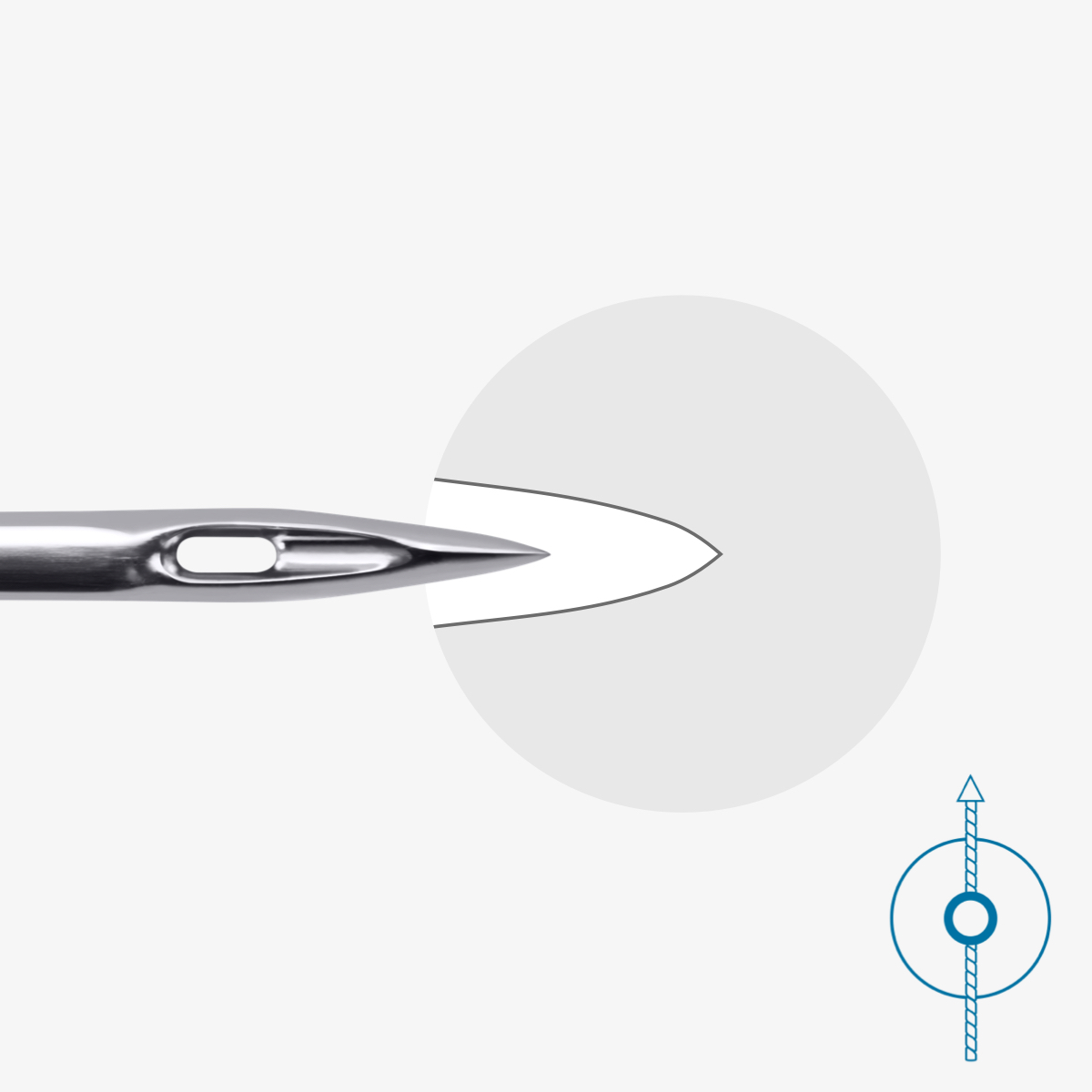
Cutting Point (Leather Types)
Cuts through material instead of pushing it aside. Used for Leather, Synthetic leather and Heavy materials.
1.3 Needle System
The needle system defines compatibility with your machine. There are over 200 systems in the industry, but only a few are commonly used in embroidery.
⚠️ Always check your machine manual before using a needle system.
Common Embroidery Needle Systems
- 130/705H → standard home machines
- DBx1 → industrial embroidery machines
- DBK5 → larger eye version for thicker threads
- 287 WH → first embroidery-specific system
Important Note
Changing any of the following affects your embroidery: needle size (affects thread tension), needle eye (affects thread flow), needle point (affects fabric penetration). Small changes can have a big impact on quality.
1.4 How Stitches Are Made
Embroidery stitches are created through a repeating cycle:
- The needle penetrates the fabric
- The hook catches the thread loop underneath
- The loop is pulled around the bobbin thread
- The threads lock together
- The needle repeats the cycle to form a design
2. Needle Types
Different needle types are designed for different jobs.
Universal Needle
Works with most materials. Best all-round option.
Jersey Needle
Designed for knit fabrics.
Stretch Needle
For highly elastic materials. Helps reduce skipped stitches.
Jeans Needle
For thick fabrics like denim and heavy materials.
Microtex Needle
For very fine and tightly woven fabrics.
Leather Needle
Cuts through leather and synthetic leather.
Quilting Needle
Designed for thick-layered fabrics.
Topstitch Needle
Used for decorative stitching and multiple threads.
Metallic Needle
Designed for metallic and specialty threads.
Embroidery Needle
Special wide eye for embroidery threads and decorative yarns.
3. Fabric to Needle Guide
Different fabrics require different needles:
- Jersey fabrics → Jersey / Stretch needles
- Denim → Jeans needles
- Leather → Leather needles
- Silk/chiffon → Microtex or Universal needles
- Heavy fabrics → Jeans or Universal needles (larger size)
- Stretch fabrics → Stretch needles
4. Conclusion
Needles may look like a small detail, but they have a huge impact on embroidery quality. Once you understand needle type, needle system, and fabric compatibility — your results improve instantly. And if you're ever unsure, the safest choice is always a Universal Needle.
Now that you know your needles, make sure your stabilizer is right too — read our stabilizers guide →
Ready to start your first project? Browse our anime embroidery designs — all available as instant downloads. New to instant downloads? Read our how-to guide →
5. Thank You
Thanks for reading this guide. Understanding needles is one of the biggest steps toward professional embroidery results.